Quick answer: To choose a backpacking tent, start with capacity (many hikers pick one person more than will sleep in it), get a 3-season tent unless you camp on snow, aim for under 1.5 kg (3.3 lb) per person, and look for a double wall with good ventilation, aluminum poles and a floor with a high hydrostatic head. For windy places like Patagonia, prioritize a low dome or geodesic tent with solid guylines.
Updated November 1, 2026
Your tent is your home in the mountains. A good one shelters you from wind and rain and lets you rest; a bad one can ruin a trek or, at worst, fail in the middle of a storm. That is why it pays to choose carefully.
In this guide we explain how to choose a backpacking tent for hiking and the mountains, step by step.
1. Capacity
Tents are rated by how many people fit lying down, with little room to spare. That is why many hikers choose one size up: a 3-person tent for two leaves room for packs and is far more comfortable on rainy days.
The trade-off is weight. For long treks, a 2-person tent for two, with good vestibules for gear, is usually the best balance.
2. 3-season or 4-season
- 3-season: for spring, summer and autumn. Lighter and better ventilated. The right choice for the vast majority of hikes, including the summer season in Patagonia.
- 4-season: built for snow and extreme wind, with more poles, heavier fabrics and less mesh. Heavier and warmer. Only worth it for winter or high-altitude mountaineering.
3. Weight
For backpacking, a useful rule is no more than 1.5 kg (3.3 lb) per person: about 3 kg for a 2-person tent is reasonable, and under 2 kg counts as light. Ultralight tents weigh under 1.5 kg for two, but are usually more delicate and expensive.
A trick for groups: split the tent between two packs, with one person carrying the body and the other the fly and poles.
4. Waterproofing: hydrostatic head
Fabric water resistance is measured in millimeters of hydrostatic head. The higher the number, the more water pressure it takes before water gets through.
- Rainfly: from about 1,500 mm it handles rain well; 2,000 to 3,000 mm is a good figure for the mountains.
- Floor: needs more, because your weight presses it into wet ground. Look for 3,000 mm or more.
- Taped seams: just as important as the fabric. Without them, water gets in at the joins.
5. Structure and poles
- Freestanding: stands on its poles even without stakes. You can move it and pitch it on hard or rocky ground. The most practical.
- Non-freestanding: needs stakes and guylines (or trekking poles) to stand. Lighter, but needs good ground and practice.
- Aluminum poles: strong and light, the ones to get for the mountains.
- Fiberglass poles: cheaper but heavier, and they splinter in cold or wind. Better for car camping.
6. Double wall, ventilation and condensation
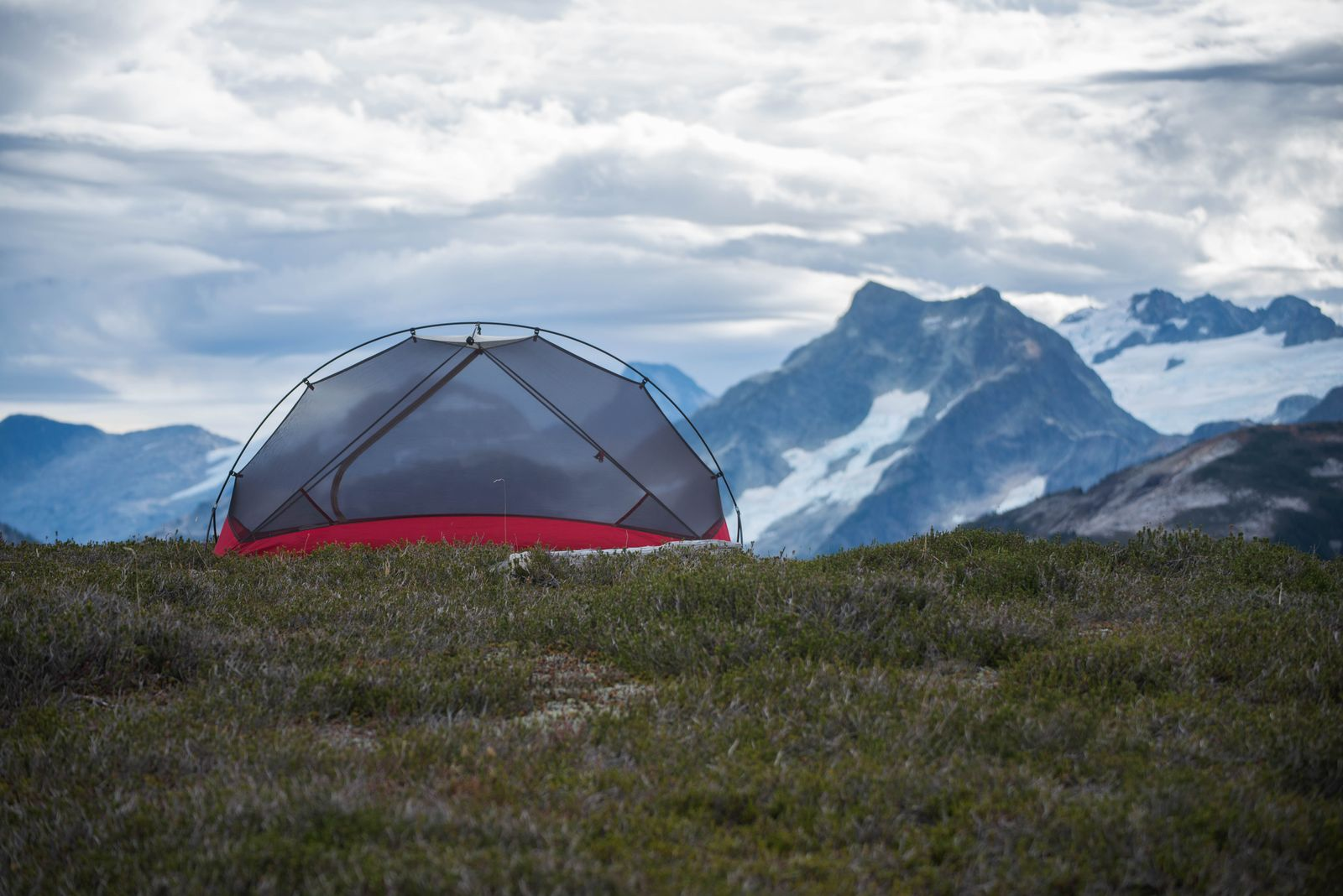
A mountain tent should be double-wall: a breathable inner tent and a separate waterproof rainfly. Air flows between them, reducing condensation, the moisture from your breath that collects inside and soaks your sleeping bag.
Look for high vents in the fly and leave something open at night, even when it is cold. A tent sealed tight wakes up soaked inside.
7. Doors and vestibules
- Two doors on a 2-person tent mean no climbing over each other at night.
- Vestibules: the covered space between the inner tent and the fly. That is where packs and boots go, and where you change without wetting the inside.
8. Camping in wind: a tent for Patagonia
In Patagonia, wind is the big enemy. If you will camp in El Chaltén, Torres del Paine or similar places:
- Choose a low, aerodynamic shape: dome or geodesic, with poles that cross several times.
- Use every guyline and bring a few extra good-quality stakes.
- Pitch with the lowest end into the wind and look for natural shelter like forest or rocks, but never camp under trees with dead branches.
- Use the park’s designated campgrounds. See our W Trek in Torres del Paine guide.
9. Care and lifespan
- Use a footprint under the floor to protect it from rocks and thorns.
- Never store it wet: dry it completely at home to prevent mold.
- Keep it out of the sun when not in use: UV breaks down tent fabrics.
- Practice pitching at home before your first trip.
Frequently asked questions
For most hikes, a 3-season, freestanding, double-wall tent with aluminum poles that weighs no more than about 1.5 kg (3.3 lb) per person.
As a guide, the rainfly should be 1,500 mm or more, ideally 2,000 to 3,000 mm for the mountains, and the floor 3,000 mm or more, with taped seams.
A 3-season tent for spring, summer and autumn, which covers most hiking. A 4-season tent is only worth it for snow, winter or high-altitude trips.
Use a double-wall tent, open the vents, leave a door partly open if the weather allows, and do not cook or store wet clothes inside.
Recommended gear
If you need to round out your kit, these are the categories we recommend checking:
Affiliate links: if you buy through them, Modo Aventura earns a small commission at no extra cost to you.
Conclusion
To choose your tent well, start with capacity and the kind of trips you do, watch the weight and do not compromise on waterproofing or ventilation. If you camp in windy places, prioritize stability. Complete your shelter with a good sleeping bag and a hiking backpack of the right size.
Which tent do you use? Leave your recommendation in the comments.