Quick answer: For hiking, the most practical backpacking stove is a screw-on canister stove using a threaded (EN 417 type) isobutane-propane canister: it is light, clean and fast. If you cook for several people or expect real cold, an integrated system or a remote-canister stove that lets you invert the canister works better. For long expeditions or very low temperatures, a multi-fuel stove is still the most reliable choice.
Updated on November 22, 2026
In the mountains, a hot meal changes everything: a cup of tea or mate when you wake up, a dinner that brings your energy back and, above all, the ability to melt snow or boil water when you need it. For that, you need a good stove.
In this guide we explain how to choose a backpacking stove: the main types, which fuel works best for your climate, how much gas to carry and how to use it safely.
1. Types of backpacking stoves
There are four main families. Each has its place, and the best one depends on group size, destination and temperatures.
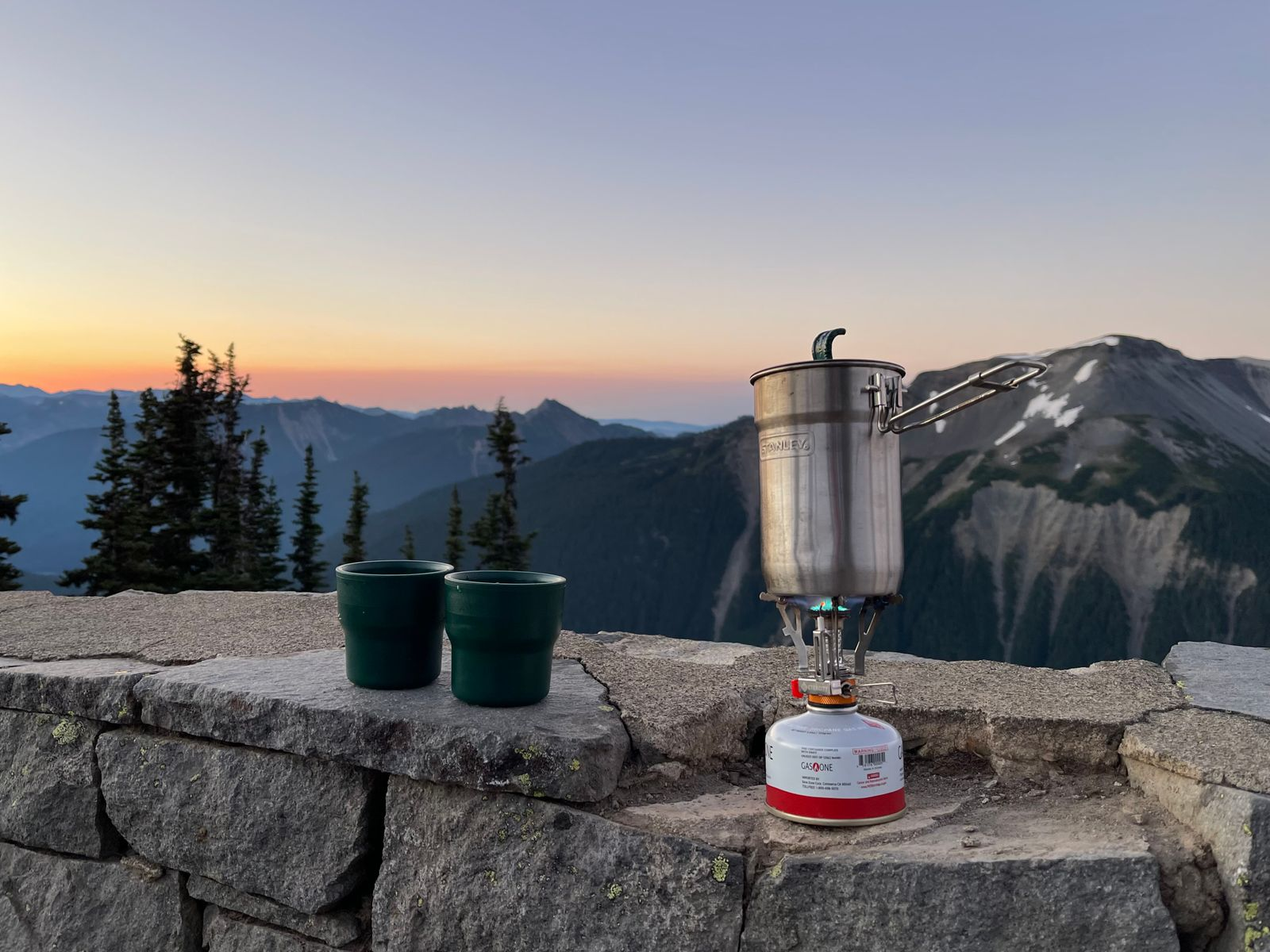
- Screw-on canister stove: the burner threads directly onto the top of the gas canister. It weighs very little (the lightest are around 50 to 100 g / 2 to 3.5 oz), nests inside your pot and lights in seconds. It is the most common choice for one to multi-day hikes.
- Integrated system: burner, pot with heat exchanger and lid work as one unit, in the style of a Jetboil or MSR WindBurner. It boils water very fast and uses little fuel because it captures more heat and handles wind well. Ideal if you mostly cook freeze-dried meals, hot drinks and soups.
- Remote-canister stove: the burner sits on the ground and connects to the canister with a hose. It is more stable with large pots and, on many models, lets you turn the canister upside down so it performs better in the cold.
- Multi-fuel stove: runs on white gas and, depending on the model, kerosene or regular gasoline. You have to pump and prime it, but it performs very well in extreme cold and at altitude. It is the expedition classic, for example on Aconcagua.
There are also alcohol stoves, very light and quiet but slow and hard to control in the wind, and small wood stoves, which depend on finding dry twigs and on fires being allowed in the area.
2. Fuel: butane, isobutane and propane
Not all gas behaves the same in the cold. Gas leaves the canister by evaporating, and each component stops vaporizing well below a certain temperature:
- Regular butane: stops vaporizing near 0 °C (32 °F). It fills cheap car-camping canisters and performs poorly in the mountains as soon as it gets chilly.
- Isobutane: works down to about −12 °C (11 °F) at sea level. It is the base of mountain canisters.
- Propane: keeps vaporizing down to about −42 °C (−43 °F), but needs very thick containers, so it is only used in blends.
- Mountain blends: backpacking canisters mix isobutane with some propane (for example, around 20 to 25 %). More propane means better cold-weather performance.
Keep in mind that even when the air is above those temperatures, the canister cools down as you use it and the flame can drop. In the cold, keep the canister in your sleeping bag at night, carry it in a pocket before cooking and set it on something insulating, never directly on snow.
3. Threaded or pierceable canisters
Before you buy, check which canisters you can find where you hike. The mountain standard is the threaded-valve canister (EN 417, sometimes called a Lindal valve), sold in outdoor shops in sizes of roughly 100, 230 and 450 g of gas. Many brands are cross-compatible, but confirm your stove uses that thread.
Pierceable canisters and long aerosol-style canisters are cheaper and easier to find, but they usually contain regular butane and cannot be removed without emptying them. They are fine for car camping, not for the mountains.
If you are flying, remember that gas canisters are not allowed in checked or carry-on baggage. Plan to buy them at your destination, for example in Bariloche, El Chaltén or Mendoza.
4. Power, efficiency and wind
Manufacturers advertise how long a stove takes to boil a liter of water, usually 3 to 5 minutes. That figure is measured without wind and at mild temperatures, so treat it as a reference. In practice, these three things matter more:
- Wind protection: wind steals much of the heat. Integrated systems and burners with a sheltered flame perform much better in Patagonia. If you use a windscreen with a screw-on stove, do not fully wrap the canister: it can overheat.
- Pressure regulator: some stoves include one, which keeps the flame steady as the canister empties or the temperature drops.
- Simmer control: if you want to cook more than boiling water, such as rice or pasta, look for a stove that holds a low, steady flame without going out.
Piezo igniters are handy but often fail with moisture and at altitude. Always carry a lighter and spare matches in a waterproof bag.
5. How much fuel to carry
Consumption depends heavily on wind, cold, whether your pot has a lid and what you cook. As a rough guide, if you only boil water for freeze-dried meals and hot drinks, many hikers plan on 20 to 35 g of gas per person per day with a screw-on stove, and a bit less with an integrated system. A 230 g canister usually covers two people on a 3 to 4 day summer trek.
If you have to melt snow for water, consumption multiplies: plan for much more and test beforehand. To know how much is left, weigh the canister empty and full at home, or float it in water: the lower it sits, the more gas it has. And never rely only on your stove for water: also carry a way to purify water.
6. Pots and accessories worth adding
- Titanium or hard-anodized aluminum pot of 0.75 to 1 liter for one person, and 1.5 to 2 liters for two or three. Make sure it has a lid: it saves a lot of fuel.
- Canister stand: small plastic legs that clip onto the canister and keep the stove from tipping over.
- Folding windscreen, especially with remote or multi-fuel stoves.
- Long spoon to eat straight from freeze-dried meal pouches.
- Small sponge and a trash bag: everything you carry into the mountains comes back out with you.
7. Safety: what you should never do
- Do not cook inside your tent. Besides the fire risk, combustion produces carbon monoxide, an odorless gas that can be deadly in an enclosed space. If the weather forces you to use the vestibule, keep the door wide open, do it briefly and keep the stove away from fabric.
- Check the O-ring and thread before every trip. If you smell gas when screwing it on, do not light it.
- Cook on a firm, flat surface, away from dry grass, and never leave a lit stove unattended.
- Follow the protected area’s rules: in many parks in Argentina and Chile, campfires are banned and stoves are only allowed in designated areas. During high fire danger, some areas restrict even stoves. Always check with the rangers or the park’s official website.
8. Which stove for which kind of trip?
- Summer treks, one or two people: a light screw-on stove with a titanium pot. It is the simplest and most affordable setup.
- Hot drinks and freeze-dried meals in Patagonian wind: an integrated system. It uses less fuel and copes with the wind in places like El Chaltén or Torres del Paine.
- Groups or more elaborate cooking: a remote-canister stove with a large pot and good simmer control.
- Winter, high altitude or expeditions: a multi-fuel stove, or a remote stove that allows an inverted canister, with a winter blend.
Frequently asked questions
For most hikes, a light screw-on stove with an isobutane-propane canister. If it is very windy or you mainly boil water, an integrated system is more efficient.
Yes, but they lose performance. Regular butane fails near 0 °C (32 °F); isobutane-propane blends work in much colder conditions. Keep the canister warm and insulate it from the ground.
It depends on wind, cold and what you cook, but for two people who only boil water it usually lasts 3 to 4 days on a summer trek. If you melt snow, it lasts much less.
No. Gas canisters are not allowed in checked or carry-on baggage. Buy them at your destination.
It is not recommended: there is a risk of fire and carbon monoxide poisoning. Cook outside or, if you have no choice, in the vestibule with good ventilation and only briefly.
Recommended gear
If you are putting together your mountain kitchen, these are the categories we recommend checking:
- Screw-on canister stoves: Amazon · Mercado Libre
- Integrated cooking systems: Amazon · Mercado Libre
- Multi-fuel stoves: Amazon · Mercado Libre
- Titanium backpacking pots: Amazon · Mercado Libre
- Stove windscreens: Amazon · Mercado Libre
Affiliate links: if you buy through them, Modo Aventura earns a small commission at no extra cost to you.
Conclusion
To choose your backpacking stove, start with the kind of trips you do: a light screw-on stove handles most summer hikes, an integrated system shines in the wind and a multi-fuel stove is the safe bet for extreme cold. Always use mountain-blend canisters, carry spare fuel and cook outside your tent. Round out your kit with the best foods for the mountains, a good backpacking tent and our Patagonia camping checklist.
Which stove do you use in the mountains? Tell us about your experience in the comments.