Quick answer: To purify water while hiking you have four options: boil it (1 minute at a rolling boil, 3 minutes above about 2,000 m / 6,500 ft), filter it with a hollow-fiber filter, treat it with chlorine dioxide tablets, or use a UV pen. For most backpacking trips, a lightweight squeeze filter plus a few backup tablets is the most practical combination. If the water is cloudy, let it settle or strain it through a cloth before treating it.
Updated on November 5, 2026
In the mountains, water looks perfect: cold, clear and coming straight off the glacier. But even when it looks clean, it can carry bacteria, protozoa like giardia or viruses that can ruin a trip with days of diarrhea and dehydration. That is why it pays to always treat it, unless an official local source says otherwise.
This guide explains how to purify water when hiking: which methods exist, which one suits your trip and what gear to choose.
What is in mountain water
- Bacteria (such as E. coli or salmonella): mostly from animal and human waste.
- Protozoa (giardia and cryptosporidium): among the most common in mountain streams, and fairly resistant to some chemicals.
- Viruses (hepatitis A, norovirus): much smaller, and common filters do not catch them. The risk is higher near crowded areas, busy huts or towns.
- Sediment and chemicals: dirt and sand can be removed by settling or filtering, but chemicals (for example near mines or farmland) are not removed by the usual methods. In those cases, find another source.
1. Boiling
It is the safest method and needs no special gear: it kills bacteria, protozoa and viruses. Health agencies recommend a rolling boil for 1 minute, or 3 minutes above about 2,000 m (6,500 ft), because water boils at a lower temperature up high.
The downside is fuel: boiling all your water for the day burns a lot of gas and time, so in practice it is used for dinner and breakfast water and combined with another method for the water in your bottle.
2. Water filters
Backpacking filters push water through a membrane with very small pores, usually hollow fiber. They remove bacteria, protozoa and sediment, and you can drink right away. There are several formats:
- Squeeze filter: screws onto a soft bag or bottle and you squeeze. Light, cheap and very popular. Some can be connected inline with a hydration bladder hose.
- Filter bottle: fill and drink directly. Very handy for day hikes.
- Gravity filter: a large bag you hang from a tree that filters on its own. Ideal for groups and camp.
- Pump filter: heavier, but it can draw water from puddles or shallow sources.
One important detail: most filters do not remove viruses. For that there are purifiers (with even smaller pores or built-in chemical treatment). Another: hollow-fiber filters can be damaged if they freeze. If you sleep in freezing temperatures, keep it inside your sleeping bag.
3. Purification tablets and drops
- Chlorine dioxide: the most complete chemical. It kills bacteria and viruses in about 30 minutes, but cryptosporidium can take up to 4 hours, especially in cold or cloudy water. Light and perfect as a backup.
- Regular chlorine (tablets or drops): works against bacteria and viruses, but is not very effective against cryptosporidium.
- Iodine: less and less used. Not recommended for pregnant people, people with thyroid problems or for long-term use.
Always follow the dose and waiting time on the label. In very cold water, treatment takes longer.
4. UV pens
Ultraviolet light pens are dipped into the bottle and stirred for a set time, usually around a minute for half a liter or a liter. They are fast and effective against bacteria, protozoa and viruses, but they need clear water (cloudiness shields the microorganisms) and they depend on batteries, which suffer in the cold.
Which method to choose for your trip
- Day hike: a filter bottle or a squeeze filter. If you want to carry less water, check our day hike checklist.
- Multi-day trek: a squeeze filter as your main method, chlorine dioxide tablets as backup in case the filter breaks or freezes, and boil water for meals.
- Groups: a gravity filter saves a lot of time at camp.
- Crowded areas or international travel: add a method that kills viruses (chlorine dioxide, UV or a purifier).
- High mountains and snow: you will almost always melt snow, so boiling is the practical choice. Bring extra fuel.
Tips for safer water
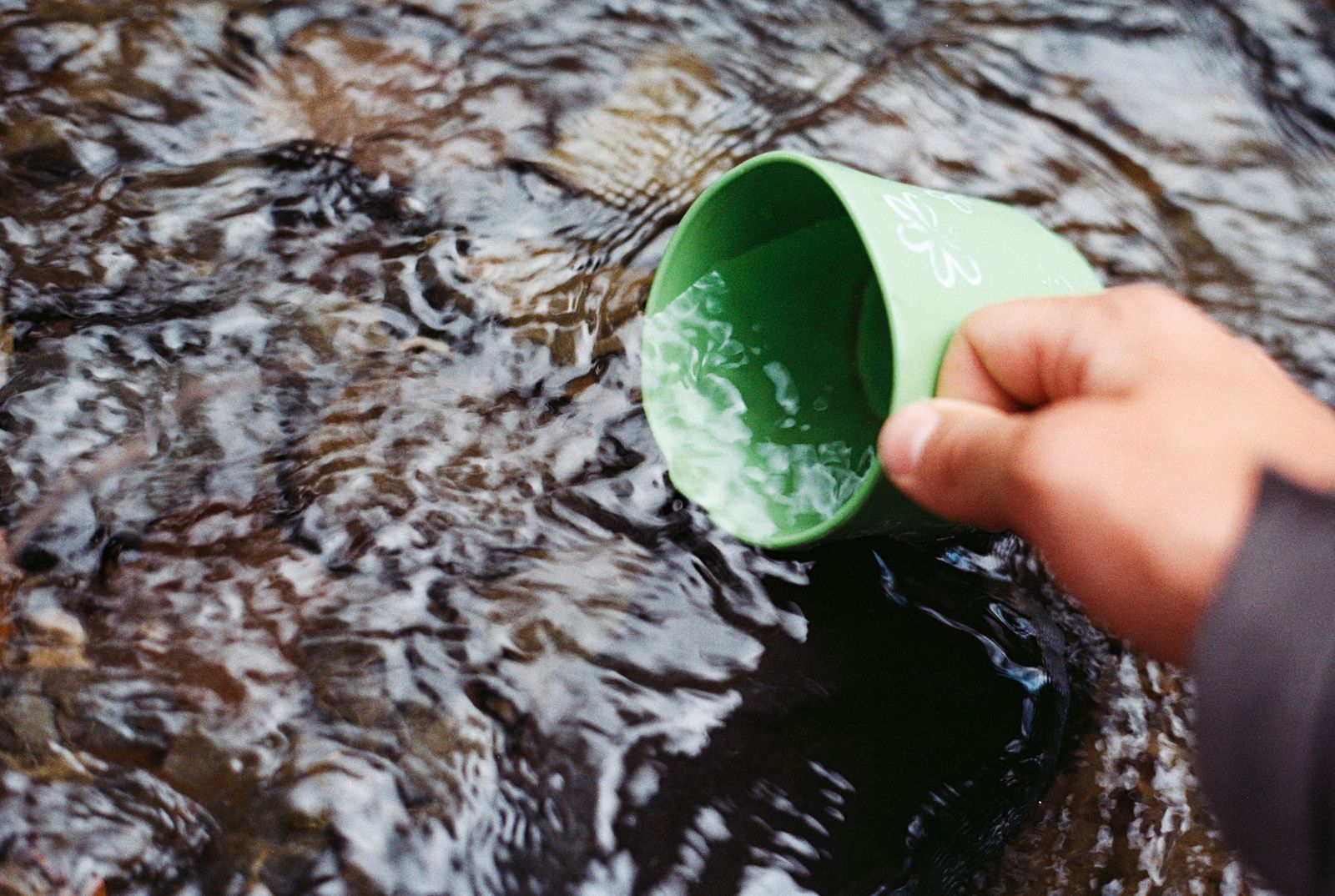
- Collect water from flowing streams rather than still lakes or puddles.
- Look for sources upstream of camps, huts, trails and grazing areas.
- If the water is cloudy, let it settle in a pot or strain it through a cloth or neck gaiter before treating it. Your filter lasts longer, and chemicals or UV work better.
- Keep your dirty water bottle separate from treated water, and do not touch the mouth of the clean bottle with dirty hands.
- Wash your hands or use hand sanitizer before eating: many stomach bugs in the mountains come from hands, not water.
In some places, like streams in Patagonian national parks, rangers may say certain sources are safe to drink. If you do not have official, up-to-date information, treat the water anyway.
Frequently asked questions
Not without treatment, even if it looks clean: it can carry bacteria, protozoa or viruses. The safe choice is to boil, filter, use purification tablets or a UV pen, unless an official source says it is safe.
One minute at a rolling boil. Above about 2,000 m (6,500 ft), keep it boiling for 3 minutes.
Most backpacking filters do not, because viruses are smaller than their pores. To remove them you need a purifier, chlorine dioxide tablets, a UV pen or boiling.
Chlorine dioxide tablets take about 30 minutes for bacteria and viruses, and up to 4 hours for cryptosporidium, especially in cold water. Always follow the manufacturer instructions.
A hollow-fiber filter that froze may be damaged without showing it, so do not trust it. Use tablets or boil your water, and from then on keep the filter inside your sleeping bag on cold nights.
Recommended gear
If you are putting together a water treatment kit, these are the categories we recommend checking:
- Squeeze water filter: Amazon · Mercado Libre
- Filter bottle: Amazon · Mercado Libre
- Gravity filter: Amazon · Mercado Libre
- Purification tablets: Amazon · Mercado Libre
- UV purifier: Amazon · Mercado Libre
Affiliate links: if you buy through them, Modo Aventura earns a small commission at no extra cost to you.
Conclusion
Treating water is one of those habits that seems over the top until the day it saves your trip. For most hikes, a light filter and a few backup tablets are enough; on snow, boil. If you are planning a trek, see our guides to the Torres del Paine W Trek and the Refugio Frey hike in Bariloche, two places with plenty of streams along the way.
What do you use to treat water in the mountains? Tell us in the comments.