Quick answer: The W Trek in Torres del Paine is a 4 to 5 day hike of around 70 to 80 km (43 to 50 miles) in Chilean Patagonia that takes in the base of the Towers, the French Valley and Grey Glacier. The best season is November to March, and you must book the refugios or campsites where you sleep well in advance.
Updated October 24, 2026
The W Trek in Torres del Paine National Park, in Chilean Patagonia, is one of the most famous treks in the world. In just a few days it passes the park’s three great icons: the base of the Towers, the French Valley and Grey Glacier. Its route draws a W on the map, hence the name.
In this guide we explain how to plan it: when to go, how to organize the stages, what to book and what to pack.
Park fees, schedules and rules change from one season to the next. Before you travel, always confirm the information on the official CONAF website and on the sites of the refugio and campsite operators.
🎟️ Civitatis deal: 5% off for Modo Aventura readers
Book any tour or activity through our link by November 30 and get 5% off the whole Civitatis catalog. The activity itself can be on any date.
See tours in Puerto Natales & Torres del Paine with 5% off →
Promotional link from the Civitatis November campaign. If you book, we earn a commission at no extra cost to you.
W Trek at a glance
- Location: Torres del Paine National Park, Magallanes Region, Chile.
- Distance: around 70 to 80 kilometers (43 to 50 miles), depending on the starting point and variations.
- Duration: 4 to 5 days, sleeping 3 or 4 nights.
- Difficulty: moderate. It is not technical, but there are long days and demanding climbs, especially the one to the base of the Towers.
- Accommodation: refugios and campsites inside the park, with mandatory advance booking.
When to go
The main season runs from November to March, the southern summer. That is when there are more daylight hours (in December and January the sun rises very early and sets late) and all services are open.
- December to February: best weather and most daylight, but also more people and higher prices. You need to book many months ahead.
- October, November, March and April: fewer visitors and beautiful colors, especially in autumn, but a higher chance of cold weather and some services with reduced hours.
In winter the trek can only be done with restrictions and, in general, with a guide.
The Patagonian wind
Talking about Torres del Paine means talking about wind. Gusts can be extremely strong, especially in open areas and near the lakes. The weather changes in minutes: you can get sun, rain and wind in the same hour. That is why a good outer layer and layered clothing are key. If you need a refresher on how to dress, read our guide to the 3-layer system.
Recommended 5 day itinerary (east to west)
You can hike the W in either direction. This is a common itinerary starting with the Towers:
Day 1: Arrival and hike up to the Chileno area
From the Central or Las Torres sector, hike up the Ascencio Valley to the Chileno area. It is a good way to get close to the Towers and leave the final climb for the next day.
Day 2: Mirador Base Torres and onward
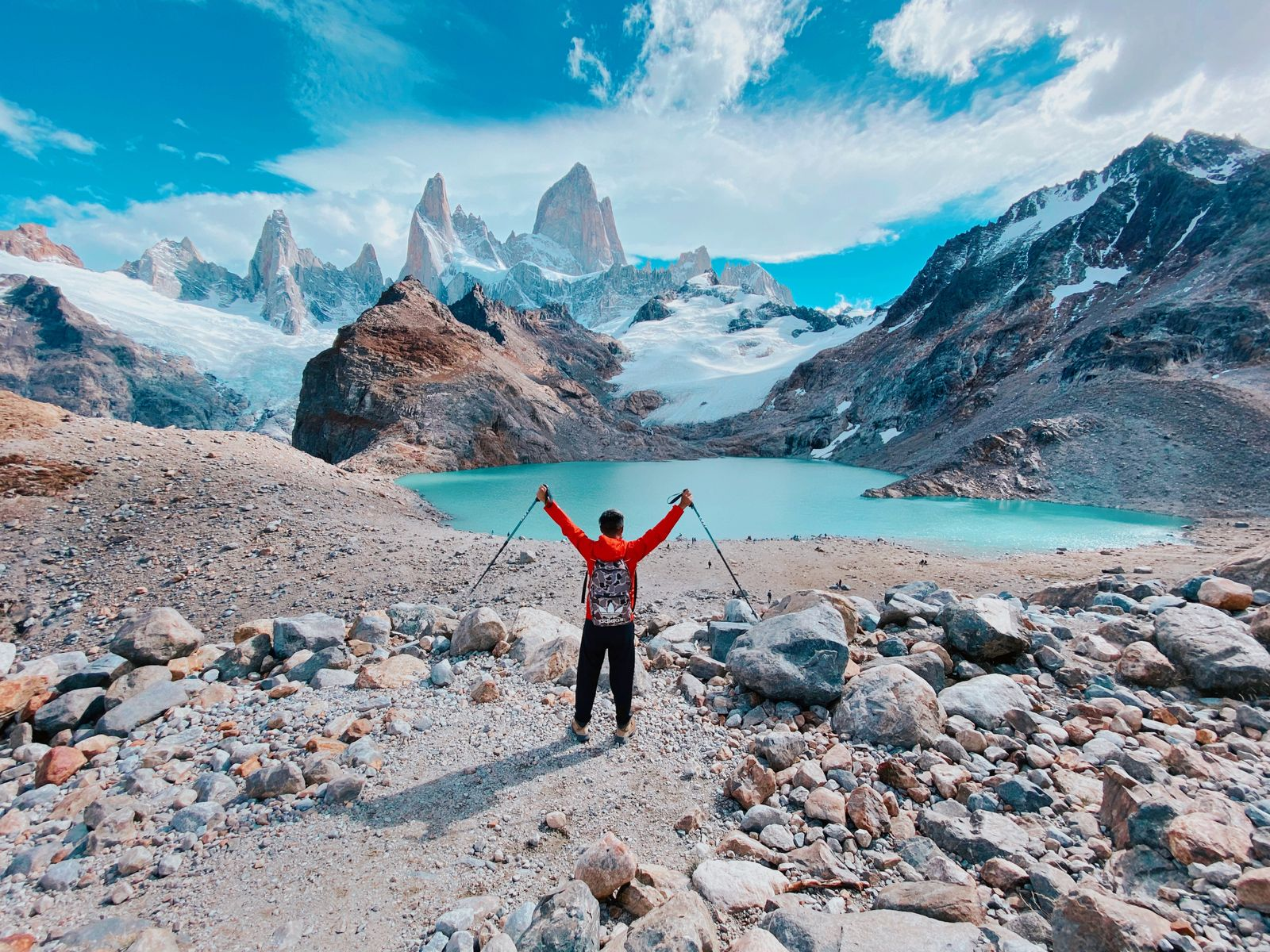
An early climb to the base of the Towers viewpoint, the park’s most famous view. The last stretch is a steep rocky moraine that takes real effort. Many hikers go up before dawn to watch sunrise over the towers. Then you head back down and continue west along the shore of Lake Nordenskjöld.
Day 3: Toward the French Valley
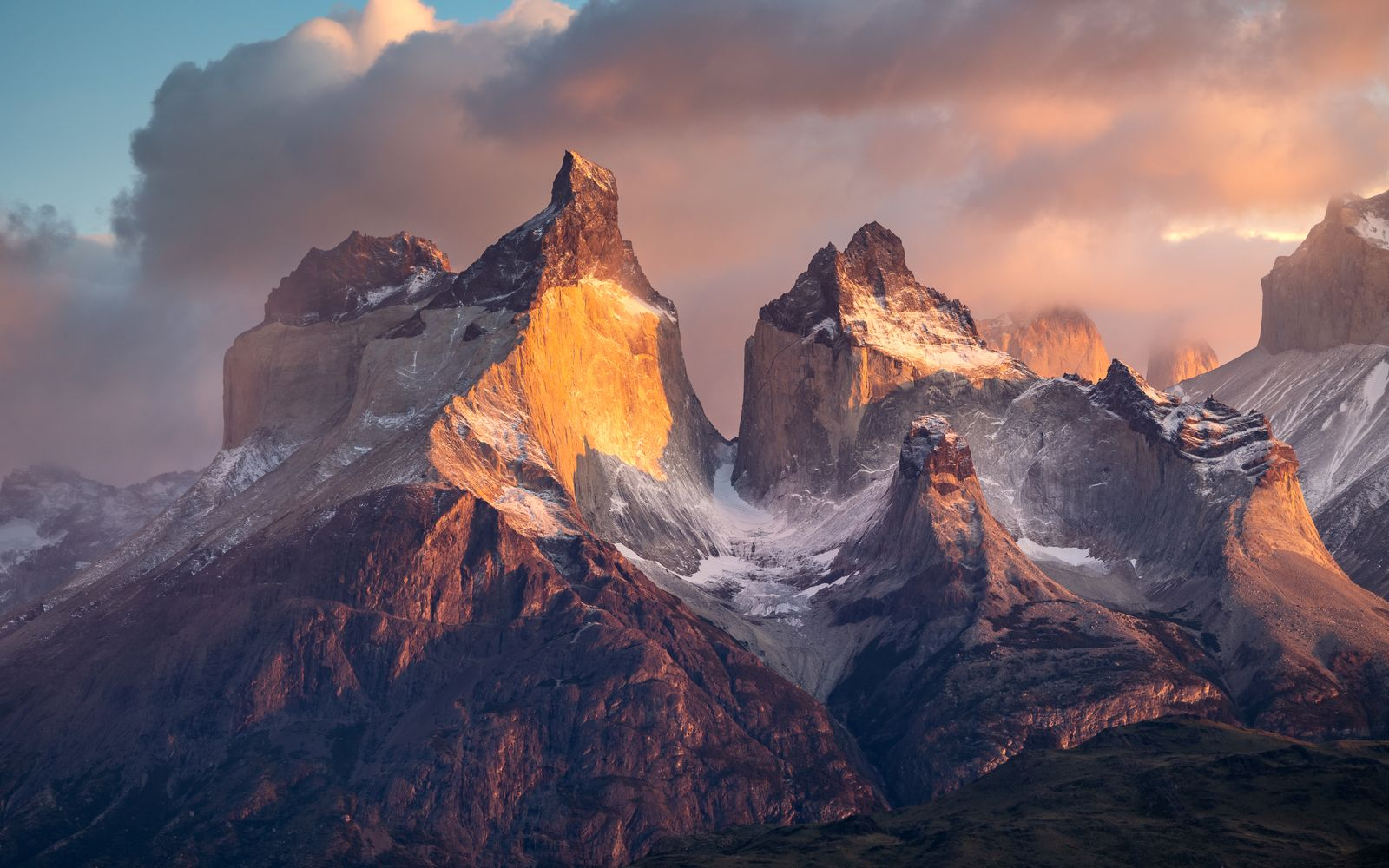
A stage along the lakeshore, with views of the Cuernos del Paine, to the French Valley area.
Day 4: French Valley and Paine Grande
Climb into the French Valley, surrounded by hanging glaciers and granite walls. You can hear ice breaking off the French Glacier. Then head down and continue to the Paine Grande area, next to Lake Pehoé.
Day 5: Grey Glacier
Hike to Grey Glacier, with viewpoints over the lake and its icebergs. Depending on your logistics, you can sleep there or return to Paine Grande to catch the catamaran out.
How to book
Wild camping is not allowed in the park: you can only sleep in the designated refugios and campsites, and you must carry confirmed bookings. Bookings are handled by the different park operators and by CONAF depending on the sector, so it is best to plan your full itinerary before booking each night.
You will also need:
- A park entrance ticket, bought online.
- Transport from Puerto Natales to the park, and the Lake Pehoé catamaran if your itinerary includes it.
What to pack
On top of the basic gear in our hiking checklist, for the W you need:
- A 40 to 50 liter backpack if you stay in refugios with meals included, or 50 to 65 liters if you carry a tent and stove. We help you choose in our hiking backpack guide.
- A quality waterproof, windproof jacket: the most important item of all.
- Rain pants.
- A fleece or down jacket for the evenings.
- Waterproof hiking boots, already broken in. Read how to choose hiking boots.
- Trekking poles: very useful on the descent from the base of the Towers and against the wind.
- A sleeping bag rated for temperatures around 0 °C (32 °F) if you camp.
- Dry bags to keep your clothes dry inside your pack.
- Sunglasses and sunscreen: UV radiation in Patagonia is high.
Final tips
- Book as early as possible: in high season spots sell out months in advance.
- Start early every day to leave a margin for wind or weather changes.
- Do not light fires outside designated areas. The park has suffered serious wildfires caused by visitors.
- Carry your trash out and stay on marked trails.
- Bring cash and a card, as mobile data coverage is limited.
Frequently asked questions
Between 4 and 5 days, sleeping 3 or 4 nights in the park’s refugios or campsites.
The main season runs from November to March, with more daylight and all services open. December to February is high season.
No. You can only sleep in the designated refugios and campsites, with a confirmed advance booking.
It is moderate: not technical, but it has long days and demanding climbs, especially the final stretch to the base of the Towers viewpoint.
Recommended gear
If you need to round out your kit, these are the categories we recommend checking:
- Waterproof, windproof jackets
- Waterproof hiking pants
- Trekking poles
- Dry bags
- 50 liter backpacking packs
- 32 °F (0 °C) sleeping bags
Affiliate links: if you buy through them, Modo Aventura earns a small commission at no extra cost to you.
Conclusion
The W Trek is demanding but doable for anyone in good shape with some hiking experience. With your bookings made, the right gear for wind and rain, and your mind set on enjoying it, you will experience one of the most spectacular mountain landscapes on the planet.
Have you done the W or is it on your list? Share your experience or questions in the comments.